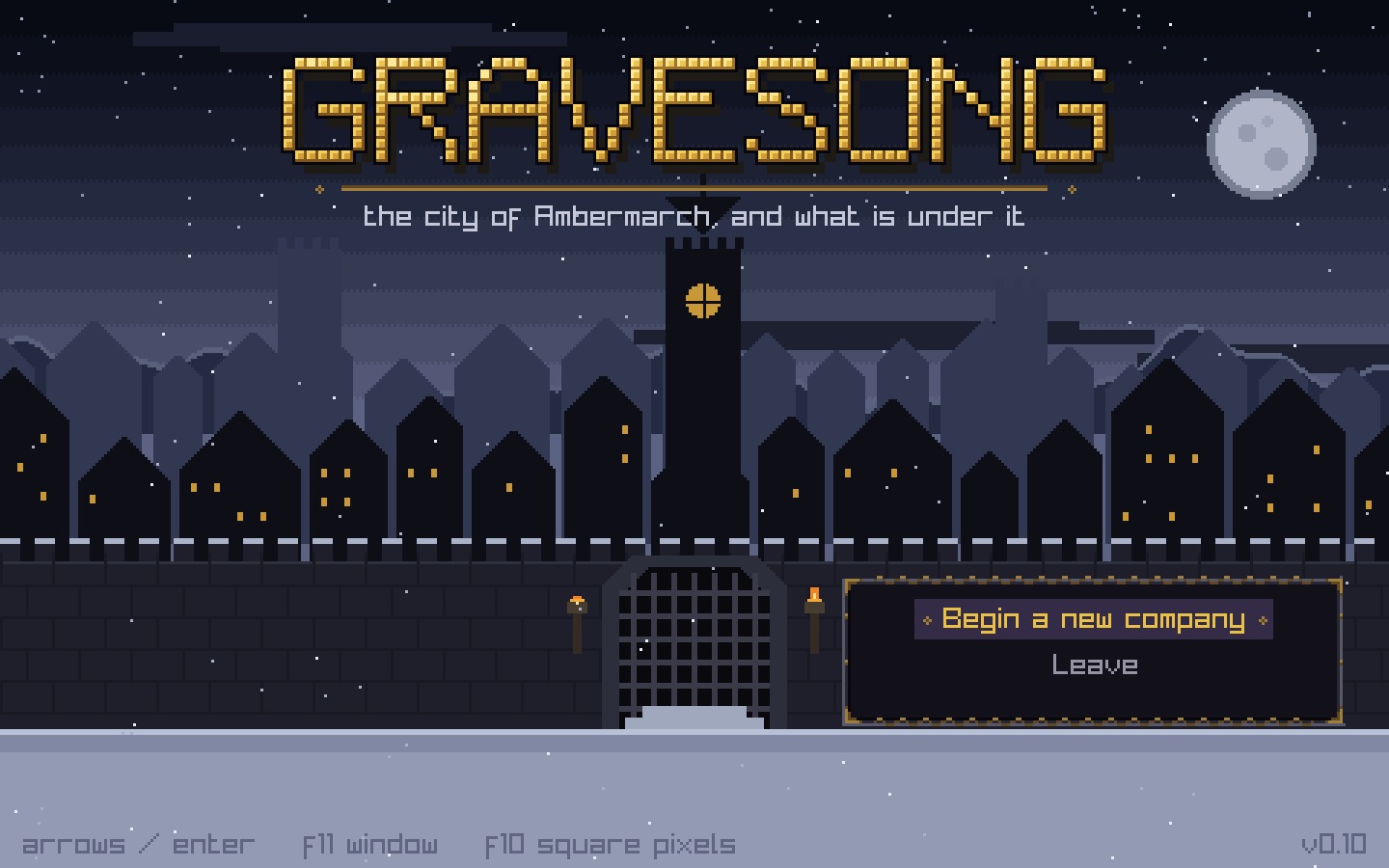
Ambermarch has been sealed under an endless winter for two years. The sorcerer Vashtor Grael
locked the gate and then went down into the drains beneath the city, and the singing that comes
up through the grates at night is not the wind. Fifteen adventurers went after him. The guild
still has their colours, folded, on a shelf.
You enrol six more.
The shape those games had in 1985, drawn the way they are now
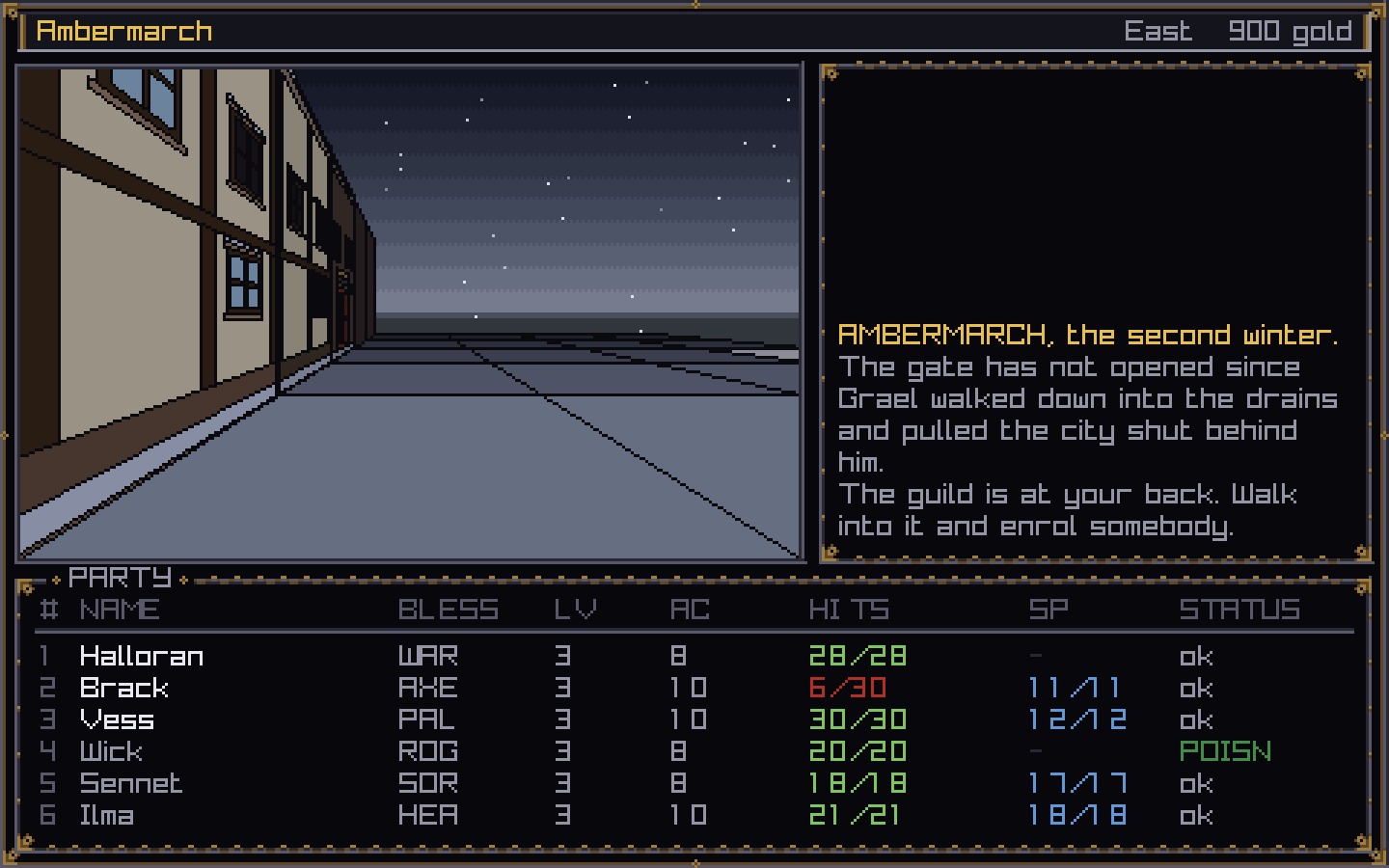
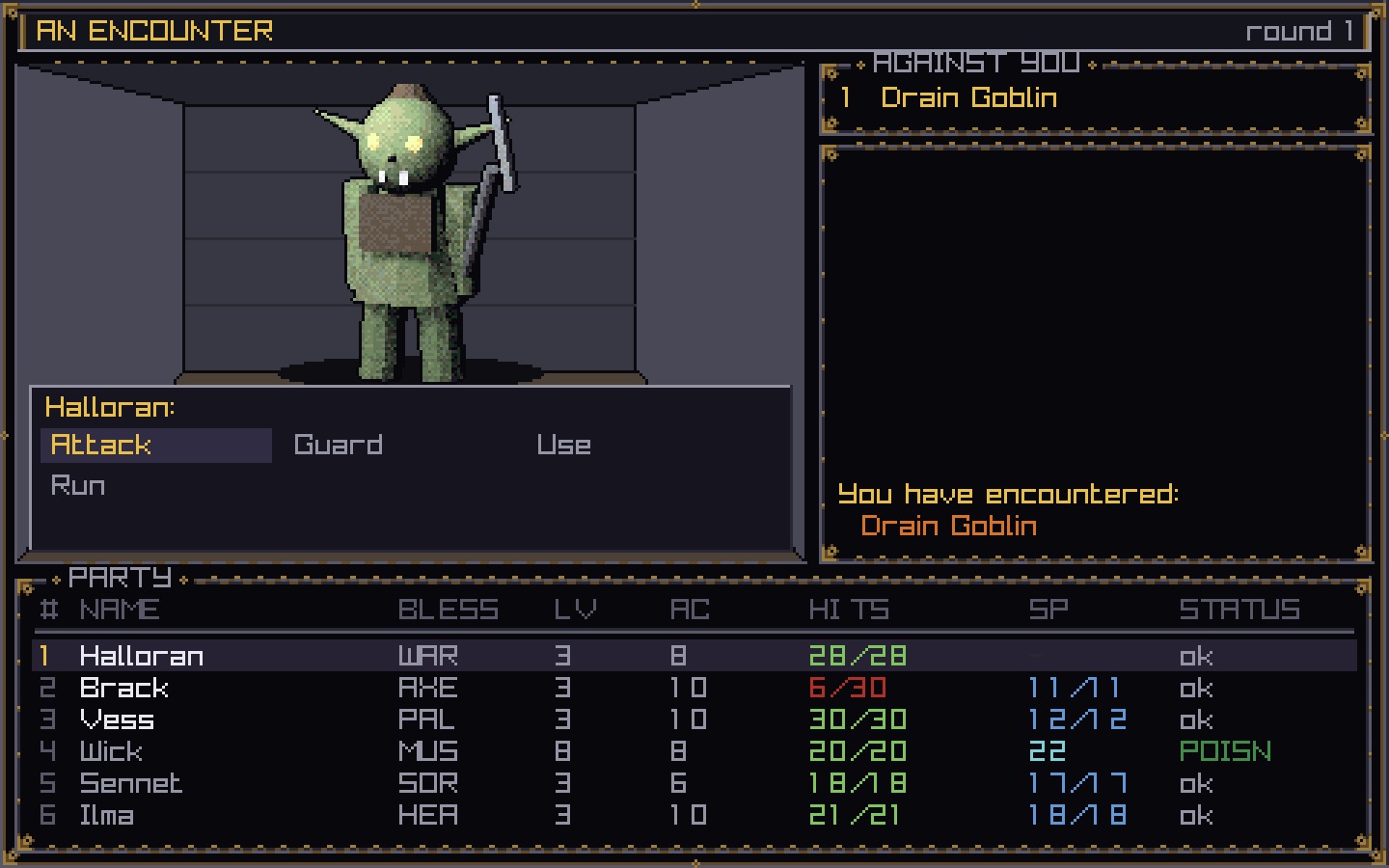
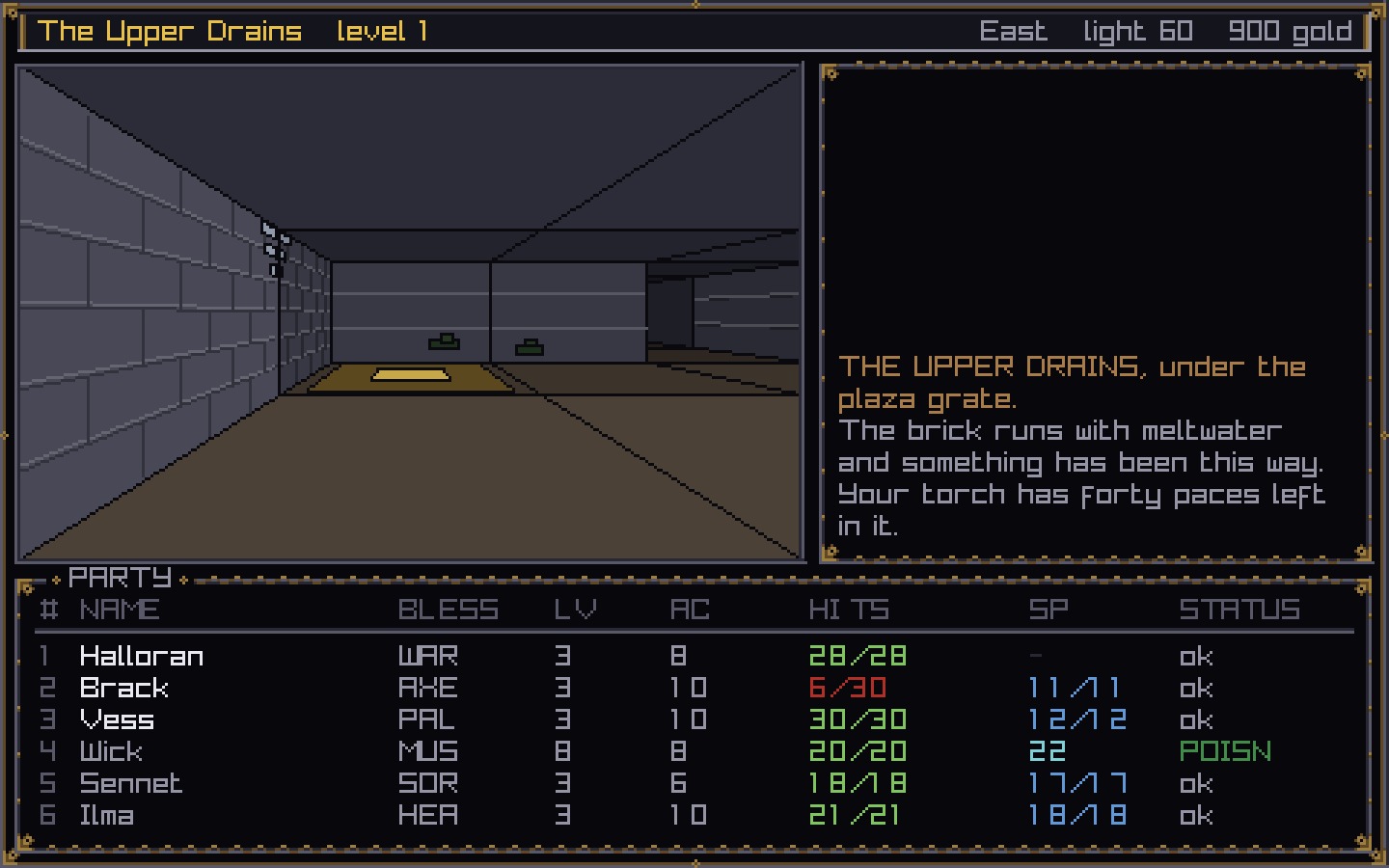
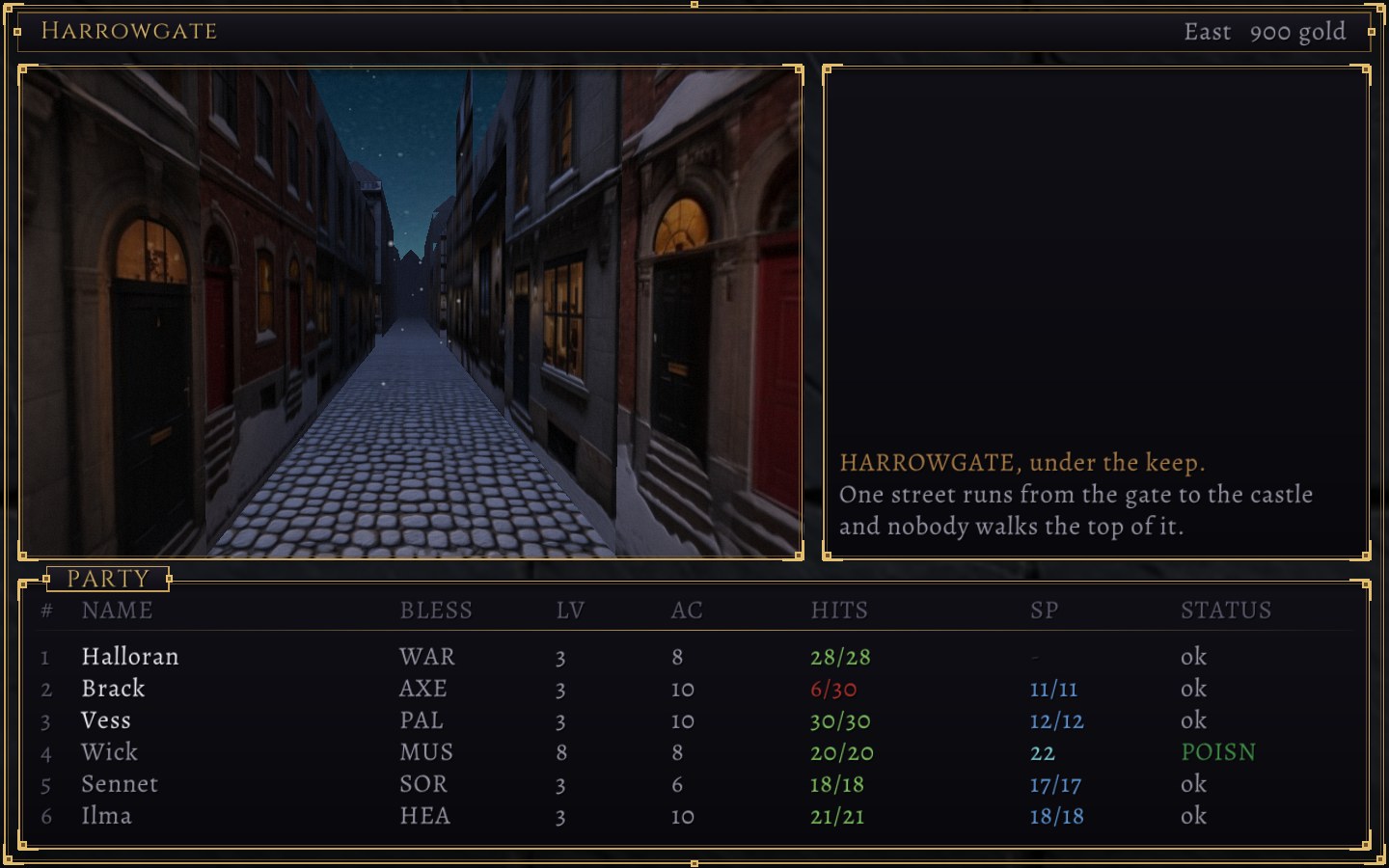
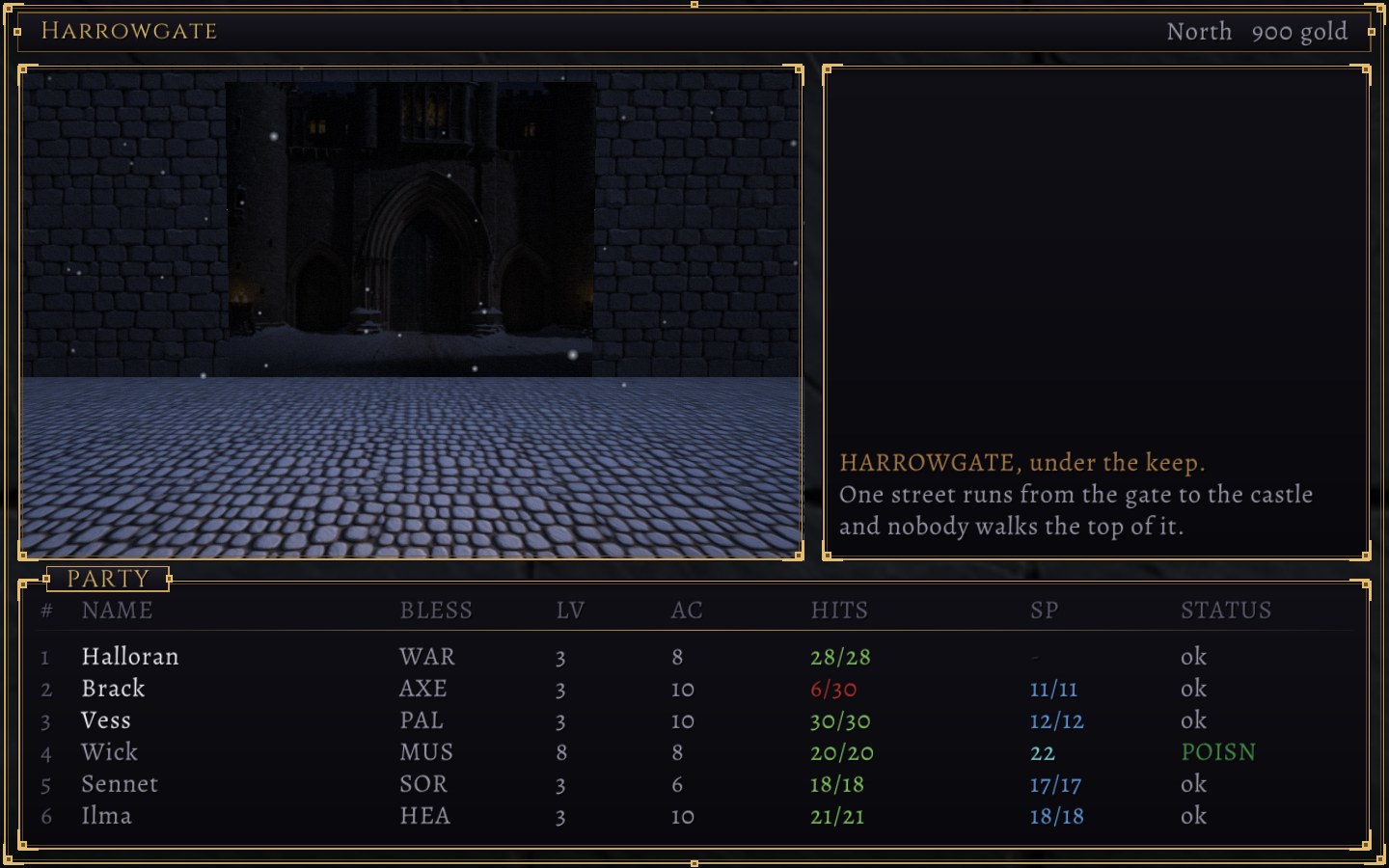
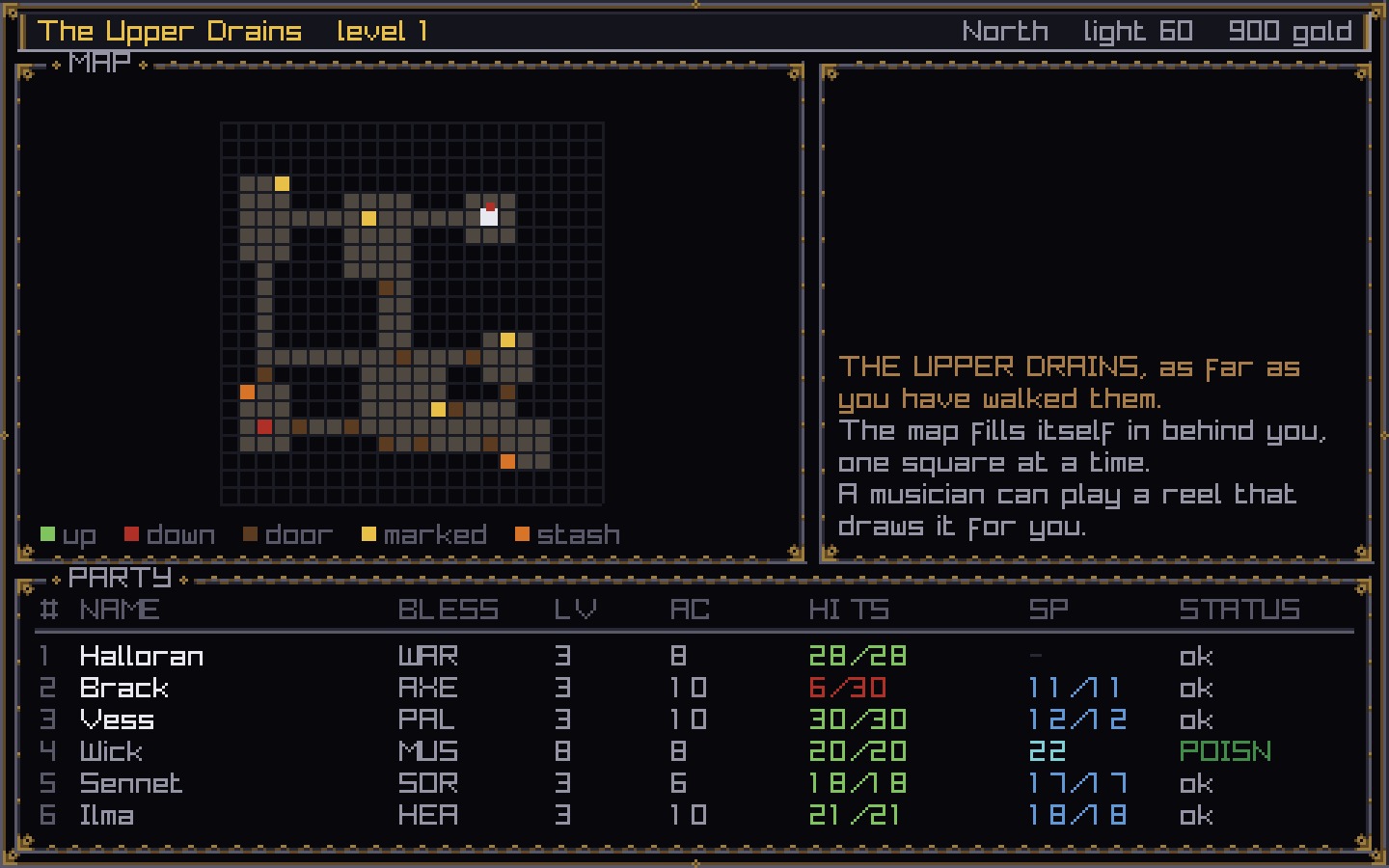
One picture window, a party roster along the bottom, and a step at a time through a city and
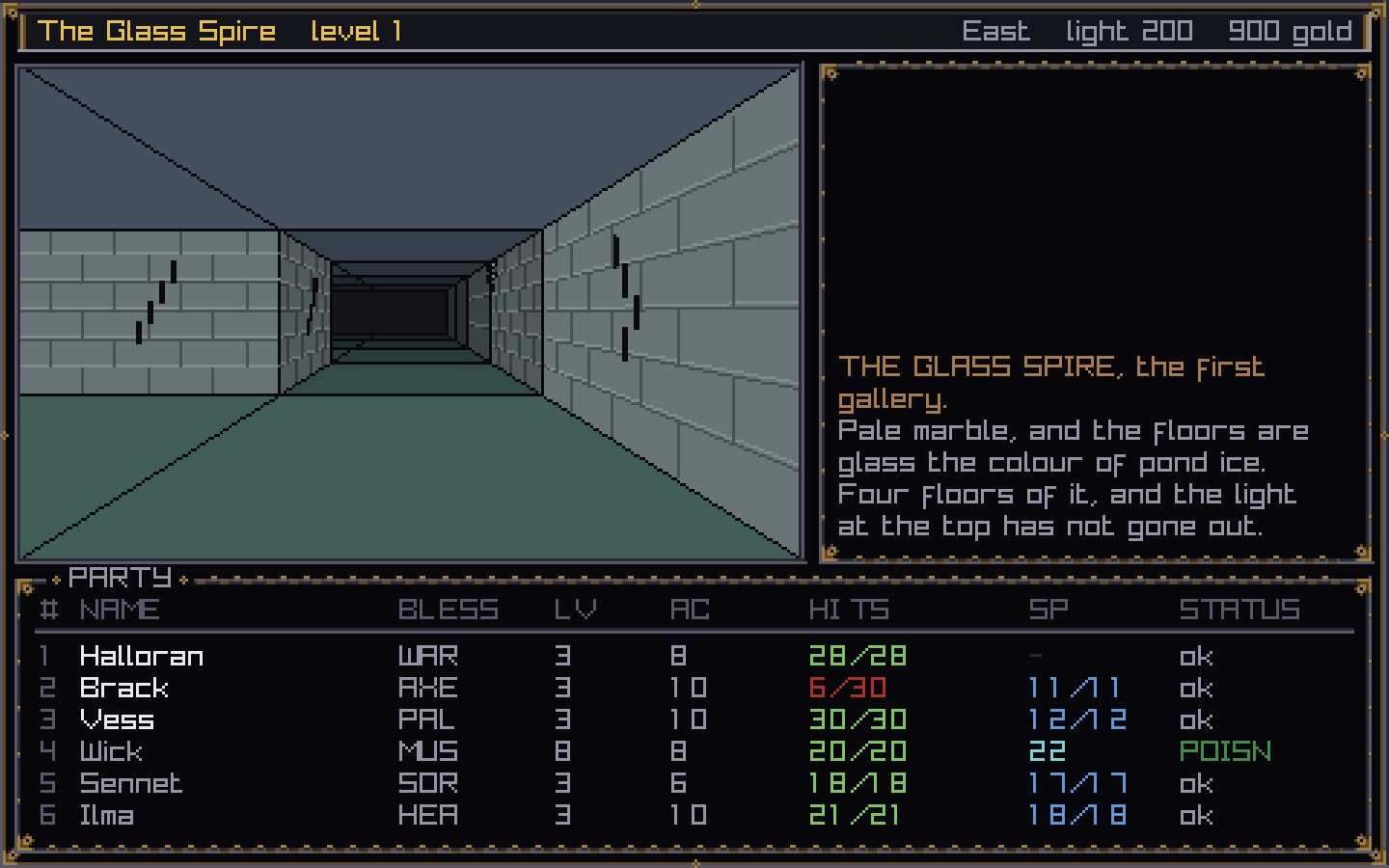
the dark under it — the same rules and the same screens. But the window is a real 3D
world now: textured brick and marble and frozen timber, a torch that flickers and falls off
into fog, moonlight on the snow, and a camera that glides from square to square.
A city you walk down, door by door
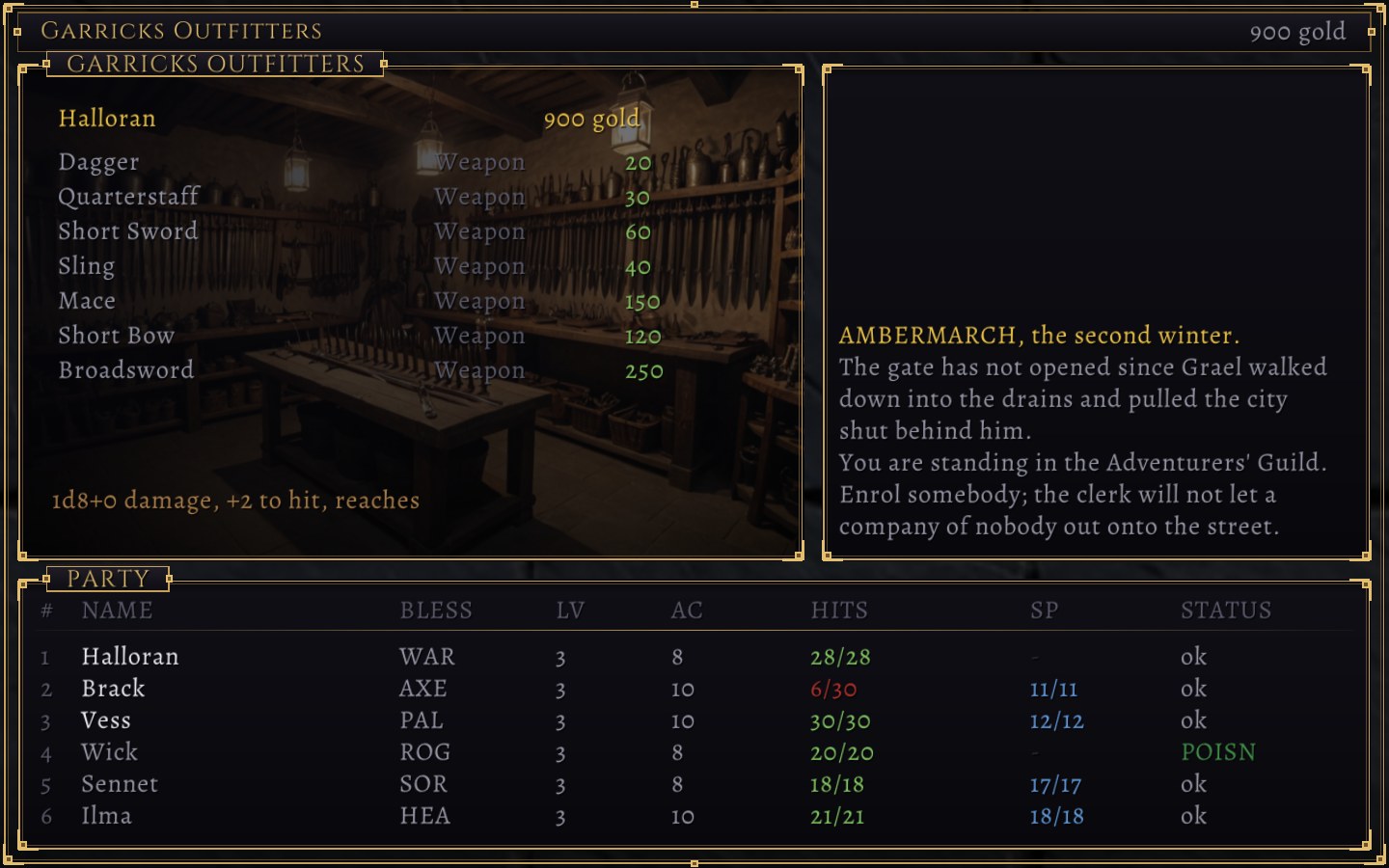
Ambermarch is a walled lattice of streets. Six doors are trades that still open — the
guild, the outfitter, the temple, the tavern, the university, the spell well. The other twenty
are houses and dead businesses you can walk into and turn over. Some of them still have
something worth taking. Some have something in them that came up out of the drains.
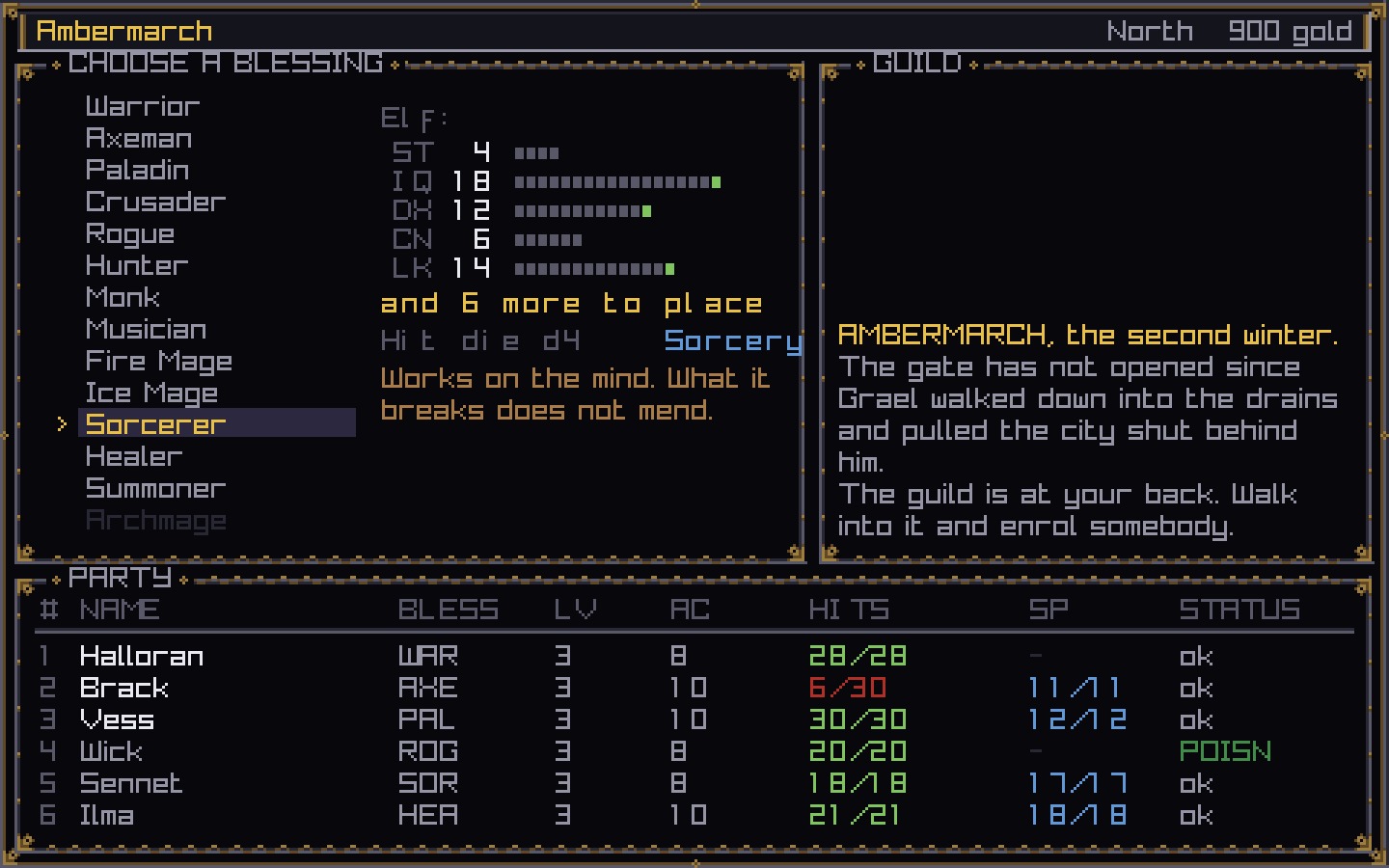
Thirteen blessings, and none of them a bad roll
Nothing is rolled. A blessing arrives with its own numbers, every blessing's numbers add up
to exactly the same total, and everybody gets the same six points to place on top. Your race
is the only thing that tips the scales — so you can build the character you actually
wanted instead of re-rolling for twenty minutes.
Ten schools of magic
Fire, Ice, Sorcery, Healing, Summoning, Song, Axe Arts, Prayer, Zeal — and Archmagery,
which is never chosen, only reached. A caster who holds the five great schools at fourth-level
spells can be named archmage at the university, and the tenth school opens.
Things that come when called
A summoner can throw a bear through the door to maul one rank and leave again, or call a wolf,
a bear or a stone hound to walk with the party for hundreds of paces — swinging every
round, drawing blows meant for your front rank, and staying until the calling or its hit
points run out.
Songs that last down a corridor
A musician spends instrument charges instead of spell points, and five of their songs are
marching tunes counted in paces rather than rounds: wounds closing as you walk, the road kept
quiet, your light stopped from burning down, a watch kept, the map drawing itself.
Saltmere, and the fleet in the ice
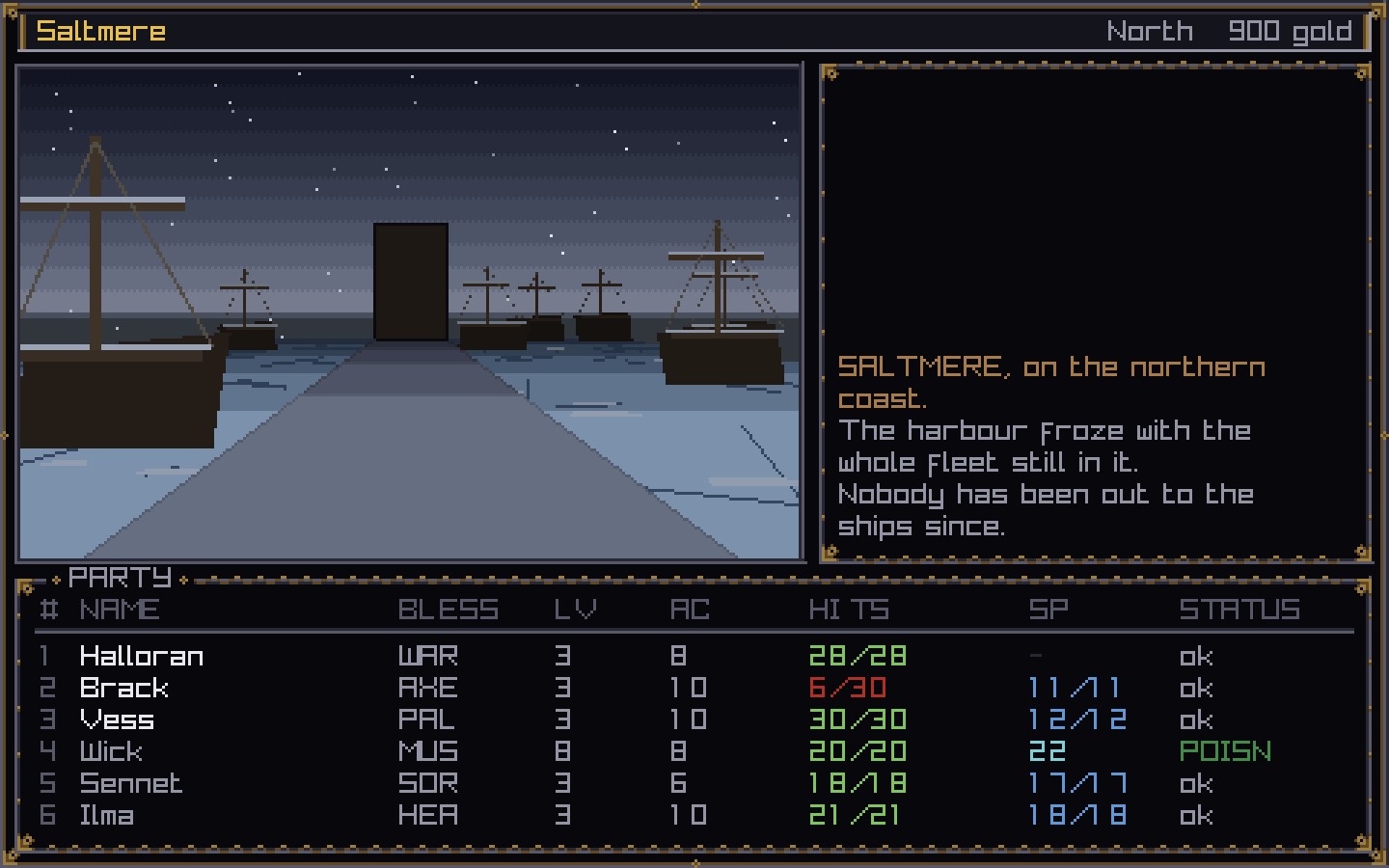
A harbour town that froze with the whole fleet still in it. Walk the quay with the ships
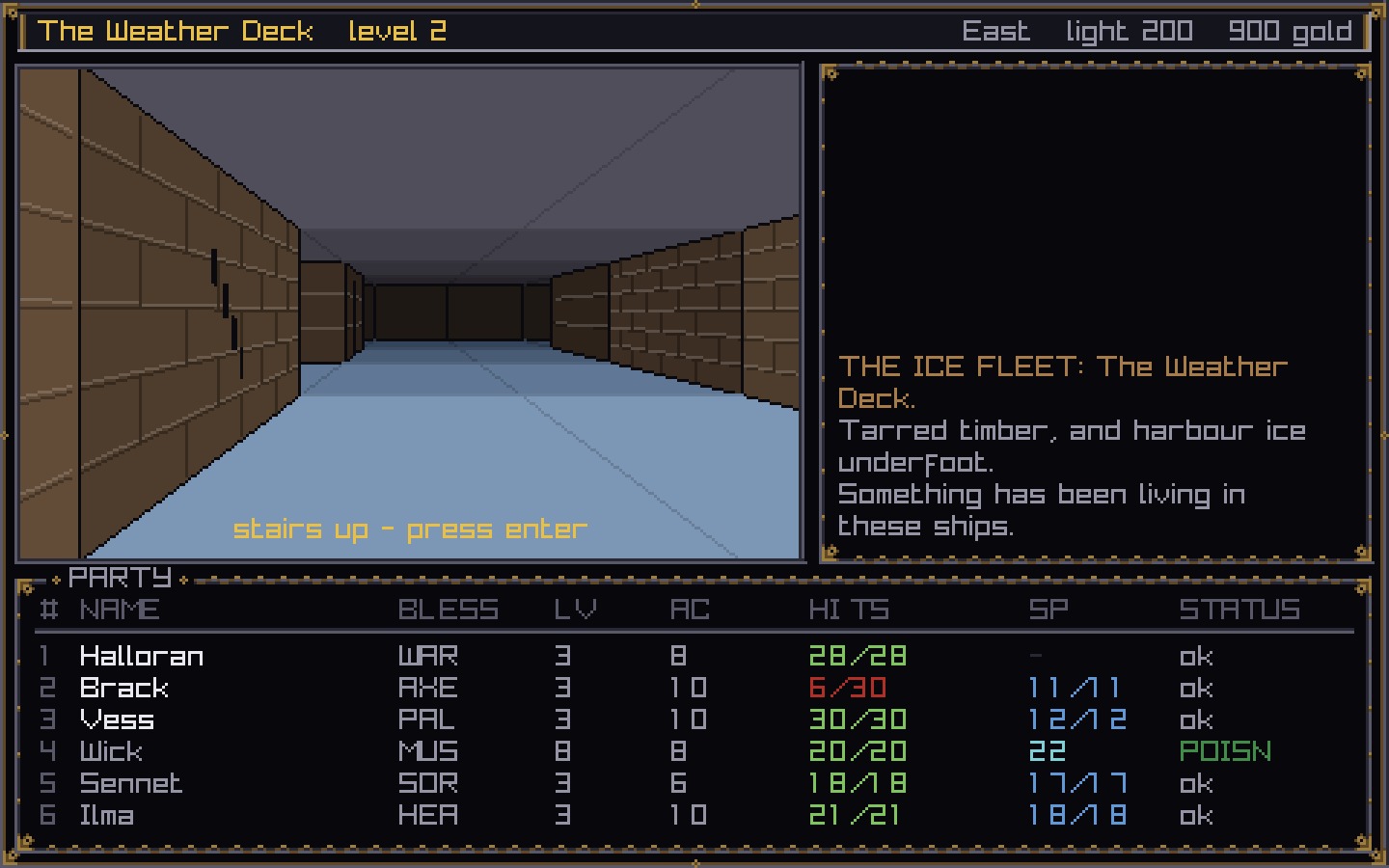
standing in the ice beside you, take the pier out to the flagship, and go down through four
floors of frozen hulls — the deck, the holds, the cabin — past drowned crews and
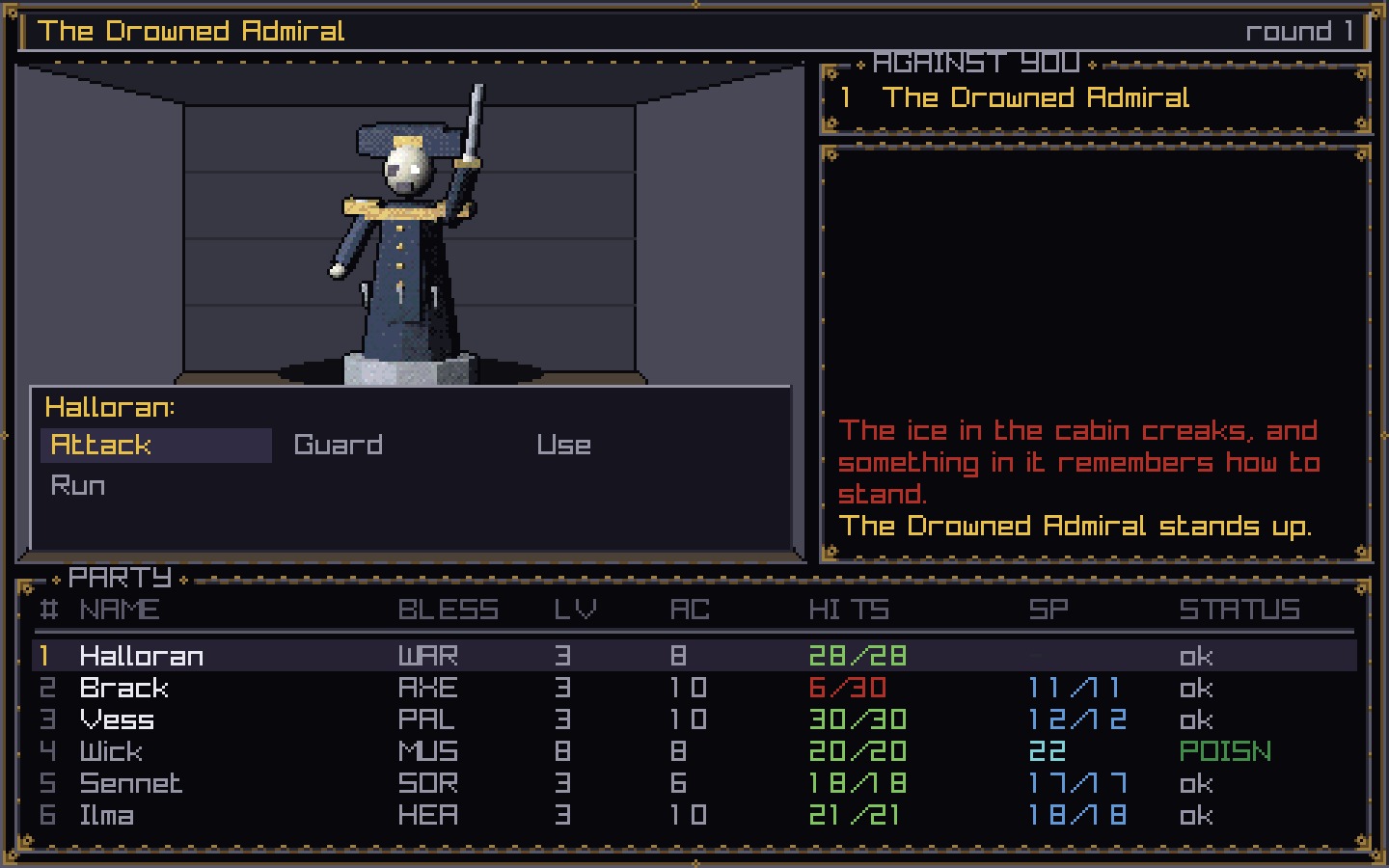
what has been living in the bilge, to the Admiral at the bottom.
Harrowgate, and the keep at the end of it
A garrison town at the foot of a castle, with one street from the gate straight up to the
keep. Climb Wintercourt Keep — the gatehouse, the frozen barracks, the long gallery
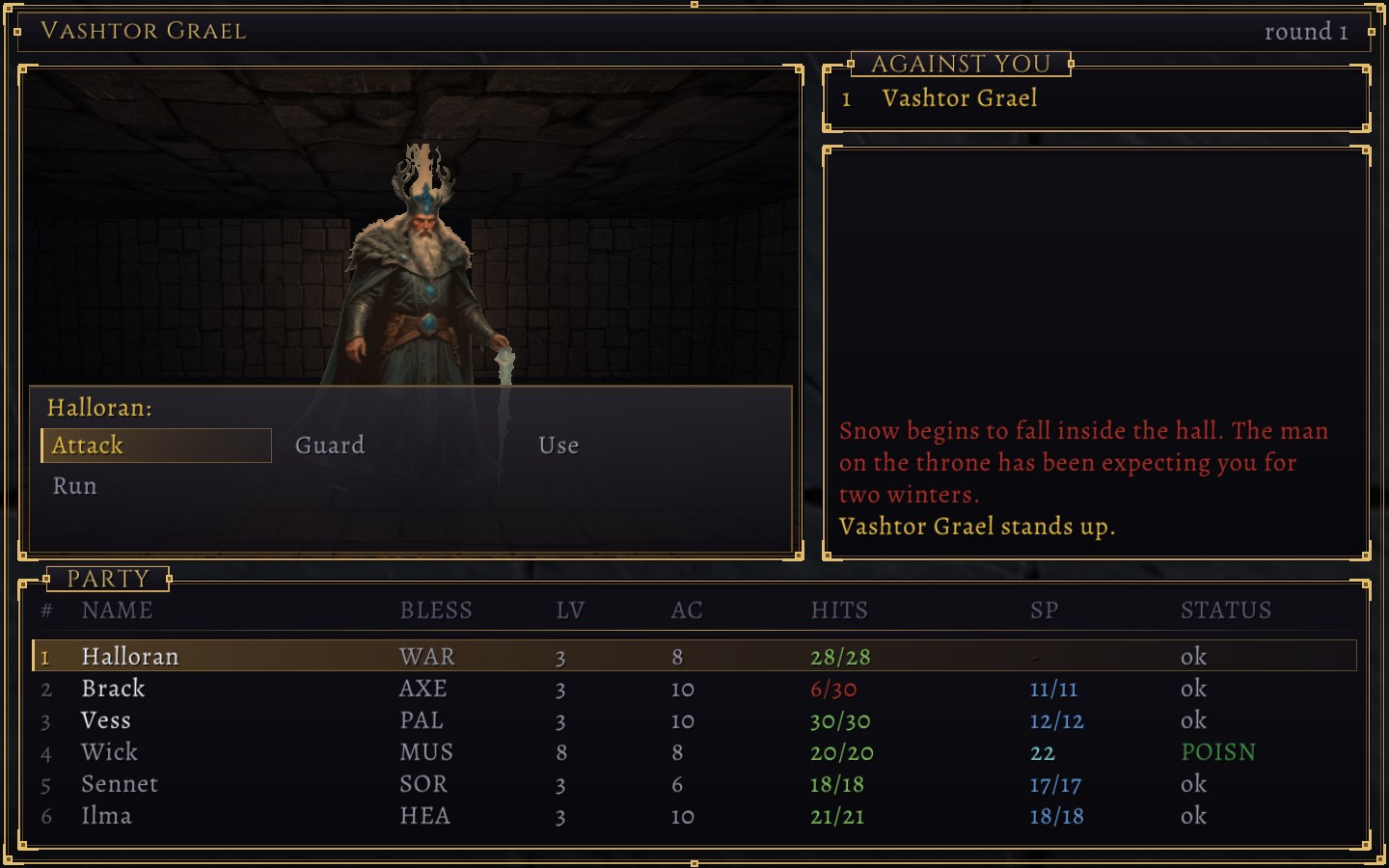
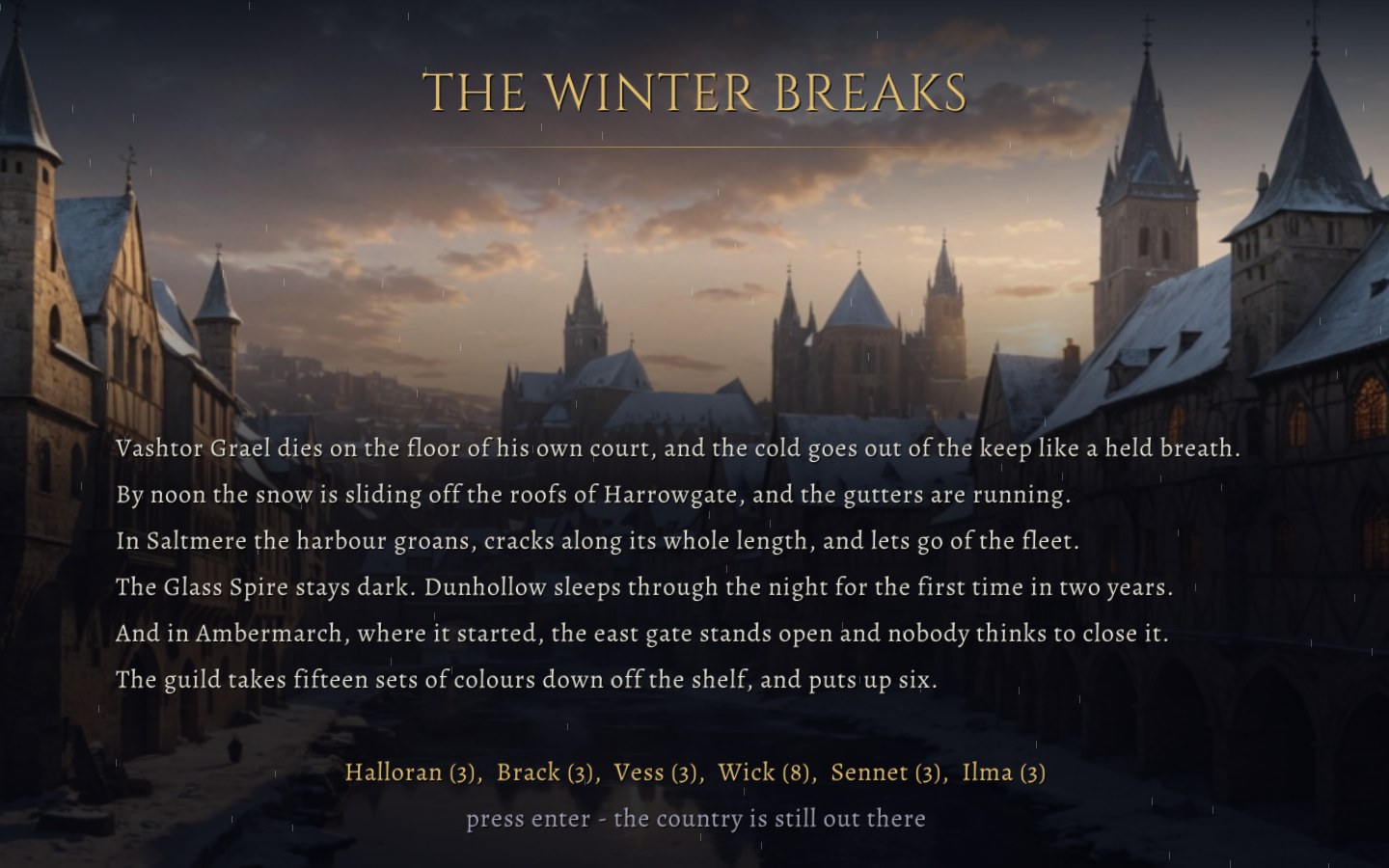
— to the Winter Court, where Vashtor Grael has been waiting on his throne. Kill him and
the winter breaks. The country is still there afterwards.
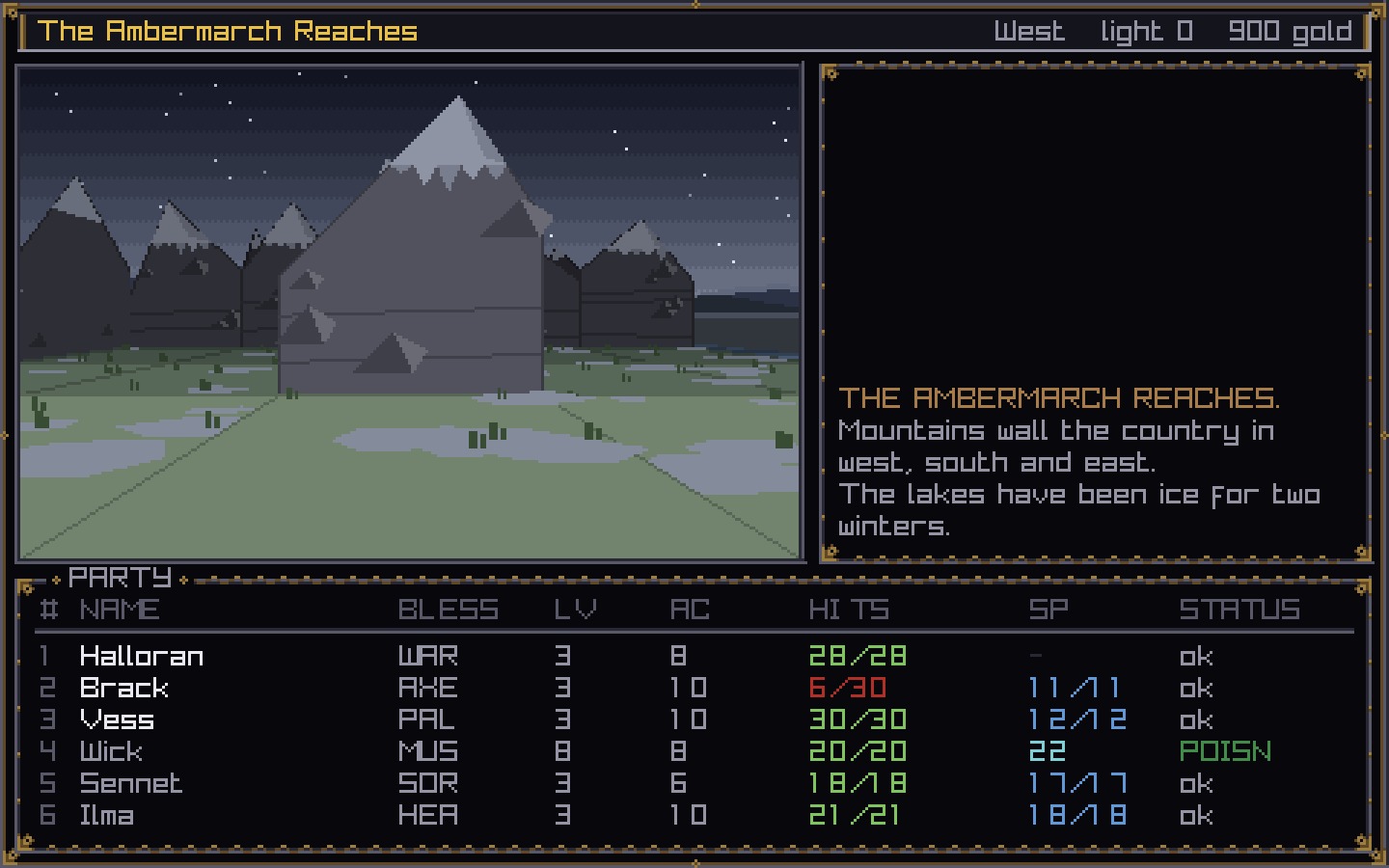
Sixty-four squares of frozen country
Once the drains are dealt with, the east gate opens on open land under snow: lakes gone to
ice, rivers, a mire, forests of conifer and bare winter trees, and mountains walling it in.
What you are walking on decides how often something finds you.
Loot that belongs to what dropped it
Vermin mostly carry nothing. Humanoids were carrying gear of their tier. The dead have silver
and grave goods on them. The Spire's glass things carry glass. Bosses sit on a hoard, and
trinkets exist purely to be carried back and sold.
Painted, every one of them
Forty-two monsters, each with its own painted portrait, standing in the torchlight of the
place you meet them. Every shop and house you walk into is a painted room. One hand-written
C++ program with no engine and no asset packs, and every sound is still two oscillators and a
noise source synthesized at startup — including eleven tunes for the musician.